


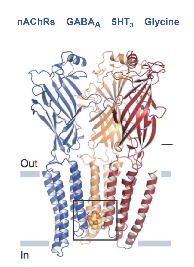
The family of ligand gated channels comprising four transmembrane segments (4TM) can be divided in two groups with the cations permeable (nAChRs, 5HT3) and anions permeable (GABAA and glycine) receptors. Each member of this superfamily of ligand gated channels are encoded by multiple genes and comprises a large number of subtypes. 4TM ligand gated ions channels can be readily expressed in Xenopus oocytes or mammalian cells for subsequent functional analysis. HiQScreen long standing experience in the field of ligand gated channels offers optimal possibilities to explore effects of your compound at one or many of these different receptors.
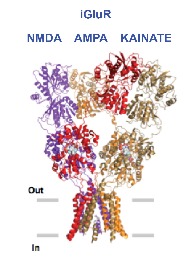
Glutamate receptors can be divided in two main classes with the metabotropic receptors (mGluR) that mediate their effects by activation of G-proteins and ionotropic (iGluR) receptors that, upon activation, trigger an ion flux through the membrane in which they are imbedded. iGluRs are formed by the assembly of four subunits and can be further subdivided according to their pharmacology in NMDA, AMPA and Kainate receptors. Expression and functional studies of iGluRs and their multiple subtypes can successfully be obtained either in Xenopus oocytes of mammalian cells and functional studies are conducted using automated or manual voltage clamp analysis.
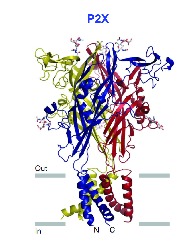
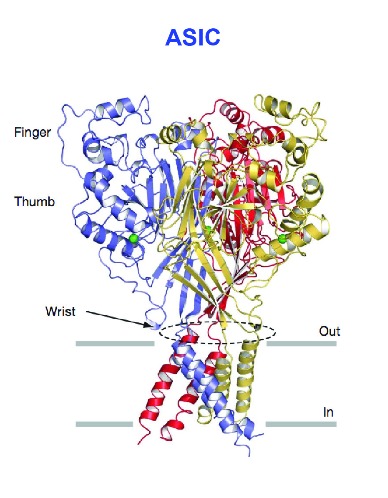
ATP-gated ion channels, referred to as P2X receptors, and acid-sensing ion channels (ASIC) belong to the class of cationic-selective channels. Crystal structures revealed that these channels result from the assembly three subunits that form in the center of this complex the ion channel. P2X or ASIC receptors can readily be expressed in Xenopus oocytes as well as in mammalian cells. Investigation of P2X and ASIC receptors can be conducted by electrophysiology allowing the characterization of compounds active at these important membrane proteins.